Okay, guys, I am back here once again. Of course, this time I have another poem for ya. Gosh, this poem is really confusing! What the heck are they talking about? Worse still, I can't believe we still have to answer questions which I myself don't even understand too! Oh well, here they are.
Telephone Conversation by Wole Soyinka:
The price seemed reasonable, location
Indifferent. The landlady swore she lived
Off premises. Nothing remained
But self-confession. “Madam,” I warned,
5 “I hate a wasted journey—I am African.”
Silence. Silenced transmission of
Pressurized good-breeding. Voice, when it came,
Lipstick coated, long gold-rolled
Cigarette-holder pipped. Caught I was, foully.
10 “HOW DARK?” . . . I had not misheard . . . “ARE YOU LIGHT
OR VERY DARK?” Button B. Button A. Stench
Of rancid breath of public hide-and-speak.
Red booth. Red pillar-box. Red double-tiered
Omnibus squelching tar. It was real! Shamed
15 By ill-mannered silence, surrender
Pushed dumbfoundment to beg simplification.
Considerate she was, varying the emphasis—
“ARE YOU DARK? OR VERY LIGHT?” Revelation came.
“You mean—like plain or milk chocolate?”
20 Her assent was clinical, crushing in its light
Impersonality. Rapidly, wavelength adjusted,
I chose. “West African sepia”—and as an afterthought,
“Down in my passport.” Silence for spectroscopic
Flight of fancy, till truthfulness clanged her accent
25 Hard on the mouthpiece. “WHAT’S THAT?” conceding,
“DON’T KNOW WHAT THAT IS.” “Like brunette.”
“THAT’S DARK, ISN’T IT?” “Not altogether.
Facially, I am brunette, but madam, you should see
The rest of me. Palm of my hand, soles of my feet
30 Are a peroxide blonde. Friction, caused—
Foolishly, madam—by sitting down, has turned
My bottom raven black—One moment madam!”—sensing
Her receiver rearing on the thunderclap
About my ears—“Madam,” I pleaded, “wouldn’t you rather
35 See for yourself?”
Q1: This poem is full of colours not just that of skin, what do you think these colours signify?
Q2: What does the dialogue in this poem reveal about these two characters?
Q3: The poet dramatises a battle, who wins finally and why?
Ans1: These colours signify a whole lot of things, even the personalities of the characters. We can see how the landlady said, "ARE YOU DARK? OR VERY LIGHT?". This goes to show that she was a bit on the 'high' side, or agitated. They even use the colours to signify the "plain or milk chocolate". This gives the readers a better view of the whole thing that colours were what mattered in the past as it represents your life status.
Ans2: The dialogue show us the true personality of the two characters and their backgrounds. We can easily tell that the landlady is a white and is a racist person due to the fact that she was very reluctant to take in the African lady. She even asked her whether she was dark or light skinned. The African lady, on the other hand, was very polite and a calm person. She did not even fight back when the landlady was discriminating her.
Ans3: The landlady won in the end. Mainly because we can see that she had slammed the phone down before the African lady could explain herself. This goes to show that coloured people are still being discriminated and are often not taken seriously. The moment the landlady knew that she was speaking to an African Negro, she hung up straight away.
Okay. So, that's what I got for this very poem. In fact, I feel like thrashing the landlady up. What a racist person. If you don't mind, I would like to call her an idiot. Even now, the whites are still discriminating the Africans. Not only that, we Asian, are discriminated too! They call us the 'yellow people'. Aargh! I wanna thrash them up! Oh well, I guess that's life. May more posts come your way!
Friday, January 28, 2011

Monday, January 24, 2011
Comic Strip!!! :D
Hiya again to all of you! Today's online learning again...... am I am not very happy. First, I woke up a little late. Next, I started coughing so hard I almost had a fit and had to go to the doctor. At 11am, I am back with two subjects behind! Aargh!! This is insane! Anyway, we have to do some random comic strip for today's Literature Arts online lesson. So, here goes..

Pretty interesting ain't it? Don't jump to conclusion! Hehe! If you want to see the original picture, here you go: http://www.pikistrips.com/ps/gallery/view_image/35377403. Now, down to my explanation:
First of all, all these pictures, backgrounds and characters are drawn by me purely on Adobe Flash CS4 Professional. They are not created on www.toondoo.com. Okay, so it looks rather ugly but I am not used to drawing on the computer. Anyway, I picked soccer to represent it since there are so many lessons you can learn from soccer. The soccer player and the goalkeeper make up most of the plot, oh, and you can include the soccer ball too.
The goalkeeper's personality of crowing and laughing at the soccer player when he kicks the ball too high shows the fact that he is very proud of himself, and straight away declare that he had missed the shot. We can see this from the second picture when he says: "Haha! Out!". The soccer player himself is just a humble little lad who does nothing when he had missed the shot. He did not even try to cover it up by saying something. All these personification makes up part of the plot and gives an idea of what is going to happen next.
Comics are supposed to be funny(At least I think so.), so the last part about the ball falling through the top of the net makes it that way. It too, tells us that unexpected things can happen when we least expected it. The background, which consists of the goal post and the grass patch, tells us the characters are at the soccer field. The different colour pants of the characters shows us that they are from different teams.
Well, that's all I have to say. To be honest, this was adapted from an old hand-drawn comic of mine. In fact, I had drawn tons of comics in primary school life time but I seem to have dump them somewhere I could not remember. I just gotta find them again! So there, that commences my post on this day of online lesson. May more posts come your way! Good luck on your comics!

Pretty interesting ain't it? Don't jump to conclusion! Hehe! If you want to see the original picture, here you go: http://www.pikistrips.com/ps/gallery/view_image/35377403. Now, down to my explanation:
First of all, all these pictures, backgrounds and characters are drawn by me purely on Adobe Flash CS4 Professional. They are not created on www.toondoo.com. Okay, so it looks rather ugly but I am not used to drawing on the computer. Anyway, I picked soccer to represent it since there are so many lessons you can learn from soccer. The soccer player and the goalkeeper make up most of the plot, oh, and you can include the soccer ball too.
The goalkeeper's personality of crowing and laughing at the soccer player when he kicks the ball too high shows the fact that he is very proud of himself, and straight away declare that he had missed the shot. We can see this from the second picture when he says: "Haha! Out!". The soccer player himself is just a humble little lad who does nothing when he had missed the shot. He did not even try to cover it up by saying something. All these personification makes up part of the plot and gives an idea of what is going to happen next.
Comics are supposed to be funny(At least I think so.), so the last part about the ball falling through the top of the net makes it that way. It too, tells us that unexpected things can happen when we least expected it. The background, which consists of the goal post and the grass patch, tells us the characters are at the soccer field. The different colour pants of the characters shows us that they are from different teams.
Well, that's all I have to say. To be honest, this was adapted from an old hand-drawn comic of mine. In fact, I had drawn tons of comics in primary school life time but I seem to have dump them somewhere I could not remember. I just gotta find them again! So there, that commences my post on this day of online lesson. May more posts come your way! Good luck on your comics!
Historical Background: Black and Whites
Heyo to you guys again. Here I am today with another whole ton of stuff to share, or HOMEWORK TO DO! Yes! I can't believe this is homework! Okay, let's get down to the facts. We have to do research on slavery in America in the past, the civil war in America and Jim Crow's Laws? Don't look surprised, I have no idea what they are talking about either! In fact, I don't even think they are talking! Oh well, just got to do it randomly...
Slavery:
Slavery in America began in the 1600s. The southern states has more slaves as there are many large plantations that grew cotton and other crops which require more labour from the slaves. Most of them are blacks that are brought from Western Africa to do work in the plantations. The usual owners of the slaves are whites though some of the blacks can have slaves too.

If that wasn't enough, slaves still have rules to abide to. What a lot of work!
Here's an example of rules I found......
A Summary of South Carolina Slave Laws:
Prop VI. " The slave, being personal chattel, is at all times liable to be sold absolutely, or mortgaged or leased, at the will of his master."
Prop. XI "Slaves cannot redeem themselves, nor obtain a change of masters, though cruel treatment may have rendered such change necessary for their personal safety."
Prop. X. "Slaves being objects of property, if injured by third persons, their owners, may bring suit, and recover damages for the injury."
Prop. XI "Slaves can make no contract."
Prop. XII Slavery is heriditary and perpetual."
Source: http://www.bowdoin.edu/~prael/projects/gsonnen/page3.html
Back to the novel, we can make a lot of links here. The blacks are not respected as they are seen as slaves or servants to them. They tend to be referred to as waste of space and are badly bullied by the whites. And yeah, I guess this research helped me understand the novel better(although there isn't already much understanding in the novel itself).
The US Civil War:
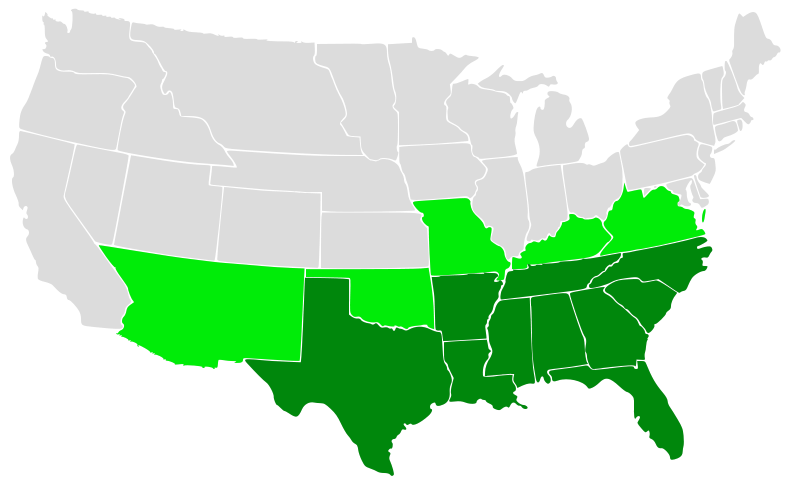
There are around 11 states in southern America(that is, the south of US, not the continent South America!). Here they are in this very blog to show themselves to you:
South Carolina (December 20, 1860)
Mississippi (January 9, 1861)
 Florida (January 10 1861)
Alabama (January 11 1861)
Georgia (January 19, 1861)
Louisiana (January 26 1861)
Texas (February 1 1861)
Virginia (April 17, 1861)
Arkansas (May 6, 1861)
North Carolina (May 20 1861)
Tennessee (June 8 1861)
The war started in 1861 and ended in 1865. During this painful 5 years, much has happened that caused United States of America to stand together today. It started when the Republican Party was formed, resulting in the formation of the Confederate States of America, which are the southern states of America. They declared succession from the Union in USA. It was also because they were angered when the Union and the rest of the USA were against slavery.
 The Republican Party was led by President Abraham Lincoln(I prefer calling him Lincoln Abraham). He was greatly against the expansion of slavery and was calling on the southern states to stop the practice before suffering further action from the Republican Party. But the Confederate States refused and began their first attack. It was April 12, 1861. Lincoln responded by asking for voluntary troops to strike back.
At first, the Confederate States dominated the battles in the east, but was turned down at the Battle of Gettysburg. The Republican Party and Union won battles to the west, splitting the Confederate in two. This counterattack greatly wrecked the Confederate's war-time spirit and on April 9, 1865, Confederate commander Robert E. Lee surrendered at the McLean House in the village of Appomattox Court House.


Though he was allowed to keep his officer's saber and horse, the Confederate States was demolished and rejoined into the Union. Five days later, President Abraham Lincoln was shot and he died early next morning. Andrew Johnson became the new President and the whole five years of hardship and sufferings has thought the Americans that war is disastrous and agreed to organize peace. This is what kept America standing today.
How does it relate to the novel? Well, I don't see much things in it that has relation to the novel. The only thing which I think relates to this is the fact that the whites are the rightful owners of the American land and the rest are just immigrants. Immigrants, are just as good as slaves in the eyes of the whites.
Jim Crow's Laws:
Jim Crow is not a person's name. In fact, it is just a set of segregation laws, rules, and customs which arose after Reconstruction ended in 1877 and continued until the mid-1960s. It was the name of the racial caste system. Under this laws, African Americans were relegated to the status of second class citizens. Jim Crow represented the legitimization of anti-Black racism.
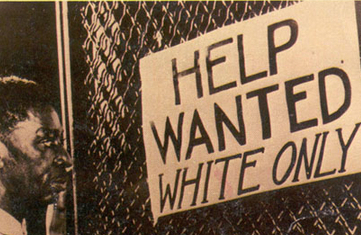
Many Christian ministers and theologians taught that Whites were the Chosen people, Blacks were cursed to be servants, and God supported racial segregation. Though the blacks were outraged and protests were made, there is nothing much they could do.

Now, we do see this kind of happenings in the novel itself. The people are often called 'niggers'(sorry for any African American reading this), and are usually discriminated by the whites. One part which surfaces this is the fact that they have different churches for different people and they even sit separately when in court.
Hmm......that's a lot of things! Especially when I decided to start adding lot more pictures to make my posts more interesting. I received complains from MYSELF that my posts are too wordy and boring, though the jokes may be there to stop from damaging your brain too much. Well, guess that's all I have for this post. But I am sure more of this will have to be done again in the future. Ugh! May more posts come your way!
Slavery:
Slavery in America began in the 1600s. The southern states has more slaves as there are many large plantations that grew cotton and other crops which require more labour from the slaves. Most of them are blacks that are brought from Western Africa to do work in the plantations. The usual owners of the slaves are whites though some of the blacks can have slaves too.
If that wasn't enough, slaves still have rules to abide to. What a lot of work!
Here's an example of rules I found......
A Summary of South Carolina Slave Laws:
Prop VI. " The slave, being personal chattel, is at all times liable to be sold absolutely, or mortgaged or leased, at the will of his master."
Prop. XI "Slaves cannot redeem themselves, nor obtain a change of masters, though cruel treatment may have rendered such change necessary for their personal safety."
Prop. X. "Slaves being objects of property, if injured by third persons, their owners, may bring suit, and recover damages for the injury."
Prop. XI "Slaves can make no contract."
Prop. XII Slavery is heriditary and perpetual."
Source: http://www.bowdoin.edu/~prael/projects/gsonnen/page3.html
Back to the novel, we can make a lot of links here. The blacks are not respected as they are seen as slaves or servants to them. They tend to be referred to as waste of space and are badly bullied by the whites. And yeah, I guess this research helped me understand the novel better(although there isn't already much understanding in the novel itself).
The US Civil War:
There are around 11 states in southern America(that is, the south of US, not the continent South America!). Here they are in this very blog to show themselves to you:
South Carolina (December 20, 1860)
Mississippi (January 9, 1861)
Florida (January 10 1861)Alabama (January 11 1861)
Georgia (January 19, 1861)
Louisiana (January 26 1861)
Texas (February 1 1861)
Virginia (April 17, 1861)
Arkansas (May 6, 1861)
North Carolina (May 20 1861)
Tennessee (June 8 1861)
The war started in 1861 and ended in 1865. During this painful 5 years, much has happened that caused United States of America to stand together today. It started when the Republican Party was formed, resulting in the formation of the Confederate States of America, which are the southern states of America. They declared succession from the Union in USA. It was also because they were angered when the Union and the rest of the USA were against slavery.
The Republican Party was led by President Abraham Lincoln(I prefer calling him Lincoln Abraham). He was greatly against the expansion of slavery and was calling on the southern states to stop the practice before suffering further action from the Republican Party. But the Confederate States refused and began their first attack. It was April 12, 1861. Lincoln responded by asking for voluntary troops to strike back.At first, the Confederate States dominated the battles in the east, but was turned down at the Battle of Gettysburg. The Republican Party and Union won battles to the west, splitting the Confederate in two. This counterattack greatly wrecked the Confederate's war-time spirit and on April 9, 1865, Confederate commander Robert E. Lee surrendered at the McLean House in the village of Appomattox Court House.
Though he was allowed to keep his officer's saber and horse, the Confederate States was demolished and rejoined into the Union. Five days later, President Abraham Lincoln was shot and he died early next morning. Andrew Johnson became the new President and the whole five years of hardship and sufferings has thought the Americans that war is disastrous and agreed to organize peace. This is what kept America standing today.
How does it relate to the novel? Well, I don't see much things in it that has relation to the novel. The only thing which I think relates to this is the fact that the whites are the rightful owners of the American land and the rest are just immigrants. Immigrants, are just as good as slaves in the eyes of the whites.
Jim Crow's Laws:
Jim Crow is not a person's name. In fact, it is just a set of segregation laws, rules, and customs which arose after Reconstruction ended in 1877 and continued until the mid-1960s. It was the name of the racial caste system. Under this laws, African Americans were relegated to the status of second class citizens. Jim Crow represented the legitimization of anti-Black racism.
Many Christian ministers and theologians taught that Whites were the Chosen people, Blacks were cursed to be servants, and God supported racial segregation. Though the blacks were outraged and protests were made, there is nothing much they could do.
Now, we do see this kind of happenings in the novel itself. The people are often called 'niggers'(sorry for any African American reading this), and are usually discriminated by the whites. One part which surfaces this is the fact that they have different churches for different people and they even sit separately when in court.
Hmm......that's a lot of things! Especially when I decided to start adding lot more pictures to make my posts more interesting. I received complains from MYSELF that my posts are too wordy and boring, though the jokes may be there to stop from damaging your brain too much. Well, guess that's all I have for this post. But I am sure more of this will have to be done again in the future. Ugh! May more posts come your way!
Monday, January 17, 2011
The Very Word, Discrimination
Hello again to you people out there! As mentioned in the previous post, I said I would make a comeback for some extra work. Well, obviously this is the one, Lucky for me, we won't be talking about silly poems this time. In fact, we will be talking about words! Yes! Words! To be exact, it is only a word. But this word is enough kill you out! Well......let's get down to work.
Discrimination, the definition:
Treatment or consideration of, or making a discrimination in favour of or against, a person or thing based on the group, class, or category to which that person or thing belongs rather than individual merit.
Wow, that seems pretty long. Now, the forms of discrimination, we have:
-Race Discrimination:
Racial discrimination differentiates between individuals or the basics of real and perceived racial differences.
-Age Discrimination:
Discrimination on the grounds of age.
-Gender Discrimination:
An adverse action taken by one person against another that would not have occurred had the person been of another gender.
-Religious Discrimination:
Treating a person or group differently because of what they do or do not believe.
-Employment Discrimination:
Disabling certain people to apply and receive jobs based on their race, age, gender, religion, height, weight, nationality, disability.
Now, that sounds like a lot. Hmm...looks like discrimination is a bad thing. Why does it exist in the first place? In fact, why are there people in this world that just wants to insult one another? Well, it has been a long time since I embedded a video, so here's TWO to get your attention. May more posts and EVEN MORE VIDEOS COME YOUR WAY!
Discrimination, the definition:
Treatment or consideration of, or making a discrimination in favour of or against, a person or thing based on the group, class, or category to which that person or thing belongs rather than individual merit.
Wow, that seems pretty long. Now, the forms of discrimination, we have:
-Race Discrimination:
Racial discrimination differentiates between individuals or the basics of real and perceived racial differences.
-Age Discrimination:
Discrimination on the grounds of age.
-Gender Discrimination:
An adverse action taken by one person against another that would not have occurred had the person been of another gender.
-Religious Discrimination:
Treating a person or group differently because of what they do or do not believe.
-Employment Discrimination:
Disabling certain people to apply and receive jobs based on their race, age, gender, religion, height, weight, nationality, disability.
Now, that sounds like a lot. Hmm...looks like discrimination is a bad thing. Why does it exist in the first place? In fact, why are there people in this world that just wants to insult one another? Well, it has been a long time since I embedded a video, so here's TWO to get your attention. May more posts and EVEN MORE VIDEOS COME YOUR WAY!
Saturday, January 15, 2011
Shel Silverstein's 'Interesting' Poems
Hiya to you people again! Hmm... school has just started for a few days and we are already getting this kind of homework? Aargh! This is nonsense! Oh, and the homework is non other than some real weird poems that are totally not my type. In fact, poetry is never my type. Oh well here goes...
The Little Boy and the Old Man by Shel Silverstein:
Said the little boy, "Sometimes I drop my spoon."
Said the old man, "I do that too."
The little boy whispered, "I wet my pants."
"I do that too," laughed the little old man.
Said the little boy, "I often cry."
The old man nodded, "So do I."
"But worst of all," said the boy, "it seems
Grown-ups don't pay attention to me."
And he felt the warmth of a wrinkled old hand.
"I know what you mean," said the little old man.
Q1: What is the underlying message that is being conveyed in this poem?
Q2: Has Shell Silverstein used any particular poetic technique that brings out this message more clearly?
Ans1: As you can tell in the poem, the boy is complaining that life is totally unfair and thought he is the only one who has the worst life. The old man told him that he, too suffers the same fate. But what they did not realise that they were only talking about their current life. The boy failed to look into what the future holds for him and the old man did not even think about his past. What they cared about was only their current life.
Ans2: Yes, he used dialogues to tell us directly what exactly the characters in the poem has to say instead of using complicated words for us to analyse and understand what they are talking about.
Messy Room by Shel Silverstein:
Whosever room this is should be ashamed!
His underwear is hanging on the lamp.
His raincoat is there in the overstuffed chair,
And the chair is becoming quite mucky and damp.
His workbook is wedged in the window,
His sweater's been thrown on the floor.
His scarf and one ski are beneath the TV,
And his pants have been carelessly hung on the door.
His books are all jammed in the closet,
His vest has been left in the hall.
A lizard named Ed is asleep in his bed,
And his smelly old sock has been stuck to the wall.
Whosever room this is should be ashamed!
Donald or Robert or Willie or--
Huh? You say it's mine? Oh, dear,
I knew it looked familiar!
Q1: Can you say that the poem is humourous? If so, how?
Q2: What aspect of the human character has been highlighted in this poem?
Ans 1: Yes, it is. The room has been described to such an exaggerating state it seemed impossible to be true, especially for a bedroom. The way that the poet described each things in the room being in an unearthly place and position certainly brings out the humour in the poem.
Ans 2: It shows how a normal person is quick to blame others for their things but is bind to their own faults.
Clooney The Clown by Shel Silverstein:
I'll tell you the story of Cloony the Clown
Who worked in a circus that came through town.
His shoes were too big and his hat was too small,
But he just wasn't, just wasn't funny at all.
He had a trombone to play loud silly tunes,
He had a green dog and a thousand balloons.
He was floppy and sloppy and skinny and tall,
But he just wasn't, just wasn't funny at all.
And every time he did a trick,
Everyone felt a little sick.
And every time he told a joke,
Folks sighed as if their hearts were broke.
And every time he lost a shoe,
Everyone looked awfully blue.
And every time he stood on his head,
Everyone screamed, "Go back to bed!"
And every time he made a leap,
Everybody fell asleep.
And every time he ate his tie,
Everyone began to cry.
And Cloony could not make any money
Simply because he was not funny.
One day he said, "I'll tell this town
How it feels to be an unfunny clown."
And he told them all why he looked so sad,
And he told them all why he felt so bad.
He told of Pain and Rain and Cold,
He told of Darkness in his soul,
And after he finished his tale of woe,
Did everyone cry? Oh no, no, no,
They laughed until they shook the trees
With "Hah-Hah-Hahs" and "Hee-Hee-Hees."
They laughed with howls and yowls and shrieks,
They laughed all day, they laughed all week,
They laughed until they had a fit,
They laughed until their jackets split.
The laughter spread for miles around
To every city, every town,
Over mountains, 'cross the sea,
From Saint Tropez to Mun San Nee.
And soon the whole world rang with laughter,
Lasting till forever after,
While Cloony stood in the circus tent,
With his head drooped low and his shoulders bent.
And he said,"THAT IS NOT WHAT I MEANT -
I'M FUNNY JUST BY ACCIDENT."
And while the world laughed outside.
Cloony the Clown sat down and cried.
Q1: Explain the irony in this poem.
Q2: Does Shel Silverstein manage to convey some harsh realities in this poem?
Q3: What poetic devices has the poet used to effectively convey his message?
Ans 1: The irony in this poem is the fact that Clooney the Clown intentionally tried to be funny so as to entertain his audience, but instead, his jokes had a negative effect on his audience and they were not impressed by his tricks. However, when he told the whole world how sad he was and wanted sympathy, people started to laugh at him instead.
Ans 2: Yes, he has. The reality here is that normal people does not fully understand each other well. They could not see the hardships of other people who are trying to entertain them, and instead insulted them.
Ans 3: Well, the poet has used poetic devices like onomatopoeia and personification. He also made the poem rhyme line after line. This caused the poem to be much easier understood and clearly described to create a vivid image of the scene.
Wait! Don't go yet! There is still one more thing which suddenly popped out of nowhere and nearly scared me to death. Oh, and the question is very personal, so I guess I can answer in the style I am very used to.
Q: Which of the above poems can you identify with the most?
Ans: Me? Oh alright! Well, I guess it shall be the Messy Room poem. The main reason for this is that I prefer poems that are mostly funny. It kills the stress in me and makes me think of what the poem is talking about. Yes, my mind works better when I am enlightened with jokes and no! Don't try to make me do my work by telling jokes to me! I will never do that!(PS: Hmm... I think this last sentence should be in my conclusion instead. Oh well.)
So, you have just seen some poems that you may regard as interesting. But it is not the case for me! Yes I absolutely hate poems! I mean, I like reading them, but if you ask me to analyze them and answer boring questions then I am not in the mood. Speaking of work, looks like I still have one more coming up for this blog. May more posts come your way!
The Little Boy and the Old Man by Shel Silverstein:
Said the little boy, "Sometimes I drop my spoon."
Said the old man, "I do that too."
The little boy whispered, "I wet my pants."
"I do that too," laughed the little old man.
Said the little boy, "I often cry."
The old man nodded, "So do I."
"But worst of all," said the boy, "it seems
Grown-ups don't pay attention to me."
And he felt the warmth of a wrinkled old hand.
"I know what you mean," said the little old man.
Q1: What is the underlying message that is being conveyed in this poem?
Q2: Has Shell Silverstein used any particular poetic technique that brings out this message more clearly?
Ans1: As you can tell in the poem, the boy is complaining that life is totally unfair and thought he is the only one who has the worst life. The old man told him that he, too suffers the same fate. But what they did not realise that they were only talking about their current life. The boy failed to look into what the future holds for him and the old man did not even think about his past. What they cared about was only their current life.
Ans2: Yes, he used dialogues to tell us directly what exactly the characters in the poem has to say instead of using complicated words for us to analyse and understand what they are talking about.
Messy Room by Shel Silverstein:
Whosever room this is should be ashamed!
His underwear is hanging on the lamp.
His raincoat is there in the overstuffed chair,
And the chair is becoming quite mucky and damp.
His workbook is wedged in the window,
His sweater's been thrown on the floor.
His scarf and one ski are beneath the TV,
And his pants have been carelessly hung on the door.
His books are all jammed in the closet,
His vest has been left in the hall.
A lizard named Ed is asleep in his bed,
And his smelly old sock has been stuck to the wall.
Whosever room this is should be ashamed!
Donald or Robert or Willie or--
Huh? You say it's mine? Oh, dear,
I knew it looked familiar!
Q1: Can you say that the poem is humourous? If so, how?
Q2: What aspect of the human character has been highlighted in this poem?
Ans 1: Yes, it is. The room has been described to such an exaggerating state it seemed impossible to be true, especially for a bedroom. The way that the poet described each things in the room being in an unearthly place and position certainly brings out the humour in the poem.
Ans 2: It shows how a normal person is quick to blame others for their things but is bind to their own faults.
Clooney The Clown by Shel Silverstein:
I'll tell you the story of Cloony the Clown
Who worked in a circus that came through town.
His shoes were too big and his hat was too small,
But he just wasn't, just wasn't funny at all.
He had a trombone to play loud silly tunes,
He had a green dog and a thousand balloons.
He was floppy and sloppy and skinny and tall,
But he just wasn't, just wasn't funny at all.
And every time he did a trick,
Everyone felt a little sick.
And every time he told a joke,
Folks sighed as if their hearts were broke.
And every time he lost a shoe,
Everyone looked awfully blue.
And every time he stood on his head,
Everyone screamed, "Go back to bed!"
And every time he made a leap,
Everybody fell asleep.
And every time he ate his tie,
Everyone began to cry.
And Cloony could not make any money
Simply because he was not funny.
One day he said, "I'll tell this town
How it feels to be an unfunny clown."
And he told them all why he looked so sad,
And he told them all why he felt so bad.
He told of Pain and Rain and Cold,
He told of Darkness in his soul,
And after he finished his tale of woe,
Did everyone cry? Oh no, no, no,
They laughed until they shook the trees
With "Hah-Hah-Hahs" and "Hee-Hee-Hees."
They laughed with howls and yowls and shrieks,
They laughed all day, they laughed all week,
They laughed until they had a fit,
They laughed until their jackets split.
The laughter spread for miles around
To every city, every town,
Over mountains, 'cross the sea,
From Saint Tropez to Mun San Nee.
And soon the whole world rang with laughter,
Lasting till forever after,
While Cloony stood in the circus tent,
With his head drooped low and his shoulders bent.
And he said,"THAT IS NOT WHAT I MEANT -
I'M FUNNY JUST BY ACCIDENT."
And while the world laughed outside.
Cloony the Clown sat down and cried.
Q1: Explain the irony in this poem.
Q2: Does Shel Silverstein manage to convey some harsh realities in this poem?
Q3: What poetic devices has the poet used to effectively convey his message?
Ans 1: The irony in this poem is the fact that Clooney the Clown intentionally tried to be funny so as to entertain his audience, but instead, his jokes had a negative effect on his audience and they were not impressed by his tricks. However, when he told the whole world how sad he was and wanted sympathy, people started to laugh at him instead.
Ans 2: Yes, he has. The reality here is that normal people does not fully understand each other well. They could not see the hardships of other people who are trying to entertain them, and instead insulted them.
Ans 3: Well, the poet has used poetic devices like onomatopoeia and personification. He also made the poem rhyme line after line. This caused the poem to be much easier understood and clearly described to create a vivid image of the scene.
Wait! Don't go yet! There is still one more thing which suddenly popped out of nowhere and nearly scared me to death. Oh, and the question is very personal, so I guess I can answer in the style I am very used to.
Q: Which of the above poems can you identify with the most?
Ans: Me? Oh alright! Well, I guess it shall be the Messy Room poem. The main reason for this is that I prefer poems that are mostly funny. It kills the stress in me and makes me think of what the poem is talking about. Yes, my mind works better when I am enlightened with jokes and no! Don't try to make me do my work by telling jokes to me! I will never do that!(PS: Hmm... I think this last sentence should be in my conclusion instead. Oh well.)
So, you have just seen some poems that you may regard as interesting. But it is not the case for me! Yes I absolutely hate poems! I mean, I like reading them, but if you ask me to analyze them and answer boring questions then I am not in the mood. Speaking of work, looks like I still have one more coming up for this blog. May more posts come your way!
Thursday, November 4, 2010
A Whole New Year.........Soon :p
Aww......MAN!!!!!!!!!!!!! A whole new year has passed in my life as a secondary one student. Woohoo!!!! Now it's time for freedom!!! Not!!! He he! By the way, goodness me, my blog has been asleep for ages, perhaps even dead by now. Hmm...I better revive it. Oh...and I hope I need not have a blog for Secondary Two. That way, I can type all I want and no one will be there to stop me!!! Well, I just created one new one for personal stuff just in case. Here it is: http://www.kcyfwanderers.blogspot.com.
As you can see, I kept being laughed at for the silly Keno Zero nickname, so I changed it to KCYF, an older nickname of mine. The wanderers thing? Well, I don't really understand that word, but I just take it as wandering around XD. That's what I am. In fact, I am nothing else except that. Well as you can see, there's no post there(Well isn't that obvious I just created it!), so I recommend that you check back much later when I have time.
Currently, I am busy trying to teach myself Actionscript 2.0 to create and programme Flash games, and of course, not to forget playing games. With that, I declare this post to an end. I haven't been typing for a long time and I don't know what to type! My exam results? No way! Seeya and may more posts come you way! That is, in the new blog. :)
(you wanna see video? here it is......ha ha, joking here!)
As you can see, I kept being laughed at for the silly Keno Zero nickname, so I changed it to KCYF, an older nickname of mine. The wanderers thing? Well, I don't really understand that word, but I just take it as wandering around XD. That's what I am. In fact, I am nothing else except that. Well as you can see, there's no post there(Well isn't that obvious I just created it!), so I recommend that you check back much later when I have time.
Currently, I am busy trying to teach myself Actionscript 2.0 to create and programme Flash games, and of course, not to forget playing games. With that, I declare this post to an end. I haven't been typing for a long time and I don't know what to type! My exam results? No way! Seeya and may more posts come you way! That is, in the new blog. :)
(you wanna see video? here it is......ha ha, joking here!)
Wednesday, August 11, 2010
Run Athlete, RUN!!! NOT!!!!!!!!!!!!
Yo dudes! So long it has been since my last informal post. Hmm......why am I saying this again I just said it in the last post! I hate those book reviews. They ate up my time. Perhaps I should eat up the books instead. Well, today I called you here for no reason. Seriously! This is totally wasting my time! I wondered why I am writing this post. It is completely pointless. So I guess we shall say goodbye for now. So......bye bye!
What? You wanted me to go on? What the heck! Now you are wasting my time instead. Oh well, I could do with a bribe. A million dollars would do me good! Ha ha! I bet you can't afford that! Oh well, let's just get back to the subject.
First of all, a whole lot of random things just happend in my school today. I have no idea why it should happen. Let's me just get down to it one by one. Well, we were told to wear PE t-shirt to school today and straight after assembly, which is around 7.45a.m., we were sent to stand along Kah Kee Lane(the drive way which led up to the school, if you are not from HCI that is). Why? Oh, it is nothing really.
Ha ha! Just kidding. The thing is, we were told that the Youth Olympic Torch bearer would run into our school to light some flame. I have no idea where he will light it on, probably a cigarette. Ha ha! And we were supposed to support and cheer and clap for that guy. As soon as we were told that, my eyes started to glitter. Already, images of a athlete holding the FIRST YOUTH OLYMPIC TORCH running into our could be seen in my head vividly. What an honour! To have the Youth Olympic Torch moving through our school!

AS we waited under the burning sun, I felt as though I am about to suffer from dehydration. By golly! This place is real HOT! Someone give me water or I shall die! The only thing that kept us going is the anticipation. Where the heck is the torch bearer at this moment? Is he asleep?

As vehicles that had nothing to do with the Youth Olympic thingie passed by us, some REAL bored people started cheering for the cars. Hmm......perhaps they fancied the fact that their cars looked so cool and expensive.

The next thing we knew, traffic police started piling in. What have we done wrong? Are we speeding. By golly! We don't even own a car, how could we speed? The waiting nearly turned to death when finally, the real guy came. It was and hour since we started waiting(what a waste of time), and what was there to greet us was not up to expectation.
Man!!! This is totally crap! Guess what? After a long hour of waiting, only a man who looked as though he is in his thirties or forties, wearing a cap, t-shirt and long pants(totally not like an athlete), came in a slow stroll holding a lantern with an extremely small flame. He was followed by a younger man with the same attire except he was wearing shorts and did not have any cap on his head, who held an UNLIT Youth Olympic Torch in his hands in a casual way.
My jaws dropped at this sight. This is a complete waste of time. Nevertheless, I was happy due to the fact that this little misfortune also brought a little fortune. The Chinese lesson was being taken up! YAY! Is not that I hate Chinese. It is just the fact that the teacher can drone on and on for hours which will make me yawn. Oh well, at least the Youth Olympic Games will be held in Singapore this year, so I will be able to watch it real nicely!

With that, I declare this post to an end. May more posts come your way!
What? You wanted me to go on? What the heck! Now you are wasting my time instead. Oh well, I could do with a bribe. A million dollars would do me good! Ha ha! I bet you can't afford that! Oh well, let's just get back to the subject.
First of all, a whole lot of random things just happend in my school today. I have no idea why it should happen. Let's me just get down to it one by one. Well, we were told to wear PE t-shirt to school today and straight after assembly, which is around 7.45a.m., we were sent to stand along Kah Kee Lane(the drive way which led up to the school, if you are not from HCI that is). Why? Oh, it is nothing really.
Ha ha! Just kidding. The thing is, we were told that the Youth Olympic Torch bearer would run into our school to light some flame. I have no idea where he will light it on, probably a cigarette. Ha ha! And we were supposed to support and cheer and clap for that guy. As soon as we were told that, my eyes started to glitter. Already, images of a athlete holding the FIRST YOUTH OLYMPIC TORCH running into our could be seen in my head vividly. What an honour! To have the Youth Olympic Torch moving through our school!

AS we waited under the burning sun, I felt as though I am about to suffer from dehydration. By golly! This place is real HOT! Someone give me water or I shall die! The only thing that kept us going is the anticipation. Where the heck is the torch bearer at this moment? Is he asleep?

As vehicles that had nothing to do with the Youth Olympic thingie passed by us, some REAL bored people started cheering for the cars. Hmm......perhaps they fancied the fact that their cars looked so cool and expensive.

The next thing we knew, traffic police started piling in. What have we done wrong? Are we speeding. By golly! We don't even own a car, how could we speed? The waiting nearly turned to death when finally, the real guy came. It was and hour since we started waiting(what a waste of time), and what was there to greet us was not up to expectation.
Man!!! This is totally crap! Guess what? After a long hour of waiting, only a man who looked as though he is in his thirties or forties, wearing a cap, t-shirt and long pants(totally not like an athlete), came in a slow stroll holding a lantern with an extremely small flame. He was followed by a younger man with the same attire except he was wearing shorts and did not have any cap on his head, who held an UNLIT Youth Olympic Torch in his hands in a casual way.
My jaws dropped at this sight. This is a complete waste of time. Nevertheless, I was happy due to the fact that this little misfortune also brought a little fortune. The Chinese lesson was being taken up! YAY! Is not that I hate Chinese. It is just the fact that the teacher can drone on and on for hours which will make me yawn. Oh well, at least the Youth Olympic Games will be held in Singapore this year, so I will be able to watch it real nicely!

With that, I declare this post to an end. May more posts come your way!
Thursday, July 15, 2010
Book Review 2: Around The World In 80 Days
I wanna sleep, so many books to read. I bet you wanna sleep too eh? Then go ahead! Hope you are late for school! He he! So......what's up? He he! The book for today is Around The World In Eighty Days. Sounds cool right? Nowadays we can travel around the whole world in less than a month. If we were to take a supersonic plane and fly non-stop, we will be able to make a lap at the diameter of the Earth in less than one day! Alright, enough of this crazy facts, time to get to the subject itself.

Around The World In Eighty Days:
The adventure starts with an English man named Phileas Fogg, who bet twenty thousand pounds with his mates at the Reform Club for travelling around the world in eighty days. He was to leave London at 8:45 P.M. on October 2, 1872 and due back at the Reform Club by December 21 at the same time. He kicked of the journey by taking a train with his new valet, a Frenchman named Passepartout, and his mates from the Reform Club were there to see him off. Here is the desired route taken(click on it to view a larger image if you can't see):

Fogg and Passepartout reached Suez in time. While disembarking in Egypt, they were watched by a Scotland Yard detective named Fix, who had been dispatched from London in search of a bank robber. As Fogg matched the description of the bank robber, Fix mistook Fogg as the criminal. Since he could not secure a warrant in time, Fix went on board the steamer conveying the travellers to Bombay. During the voyage, Fix became acquainted with Passepartout, without revealing his purpose. On the voyage, Fogg promised the engineer a large reward if he got them to Bombay early. They dock two days ahead of schedule.
After reaching India they took a train from Bombay to Calcutta. Halfway, Fogg learnt that the Daily Telegraph newspaper article was wrong – the railroad ended at Kholby and started 50 miles further on at Allahabad. Fogg promptly bought an elephant, hired a guide and started towards Allahabad.
During the ride, they came across a suttee procession, in which a young Parsi woman, Aouda, was led to a sanctuary to be sacrificed by the process of sati the next day by Brahmins. Since the young woman was drugged with the smoke of opium and hemp and obviously not going voluntarily, the travellers decided to rescue her. They followed the procession to the site, where Passepartout secretly took the place of Aouda's deceased husband on the funeral pyre, on which she was to be burned the next morning. During the ceremony, he then rised from the pyre, scaring off the priests, and carried the young woman away. Due to this incident, the two days gained earlier were lost but Fogg showed no sign of regret.
The travellers then hasten on to catch the train at the next railway station, taking Aouda with them. At Calcutta, they could finally board a steamer going to Hong Kong. Fix, who had secretly been following them, had Fogg and Passepartout arrested in Calcutta. However, they jump bail and Fix was forced to follow them to Hong Kong. On board, he showed himself to Passepartout, who was delighted to meet again his travelling companion from the earlier voyage.
In Hong Kong, it turned out that Aouda's distant relative, in whose care they had been planning to leave her, had moved, probably to Holland, so they decided to take her with them to Europe. Meanwhile, still without a warrant, Fix saw Hong Kong as his last chance to arrest Fogg on British soil. He therefore confided in Passepartout, who did not believe a word and remained convinced that his master is not a bank robber. To prevent Passepartout from informing his master about the premature departure of their next vessel, Fix got him drunk and drugged him in an opium den. In his dizziness, Passepartout still managd to catch the steamer to Yokohama, but forgot to inform Fogg.
Fogg, on the next day, discovered that the ship had left. He went in search of a vessel that will take him to Yokohama. He finds a pilot boat that took him and Aouda to Shanghai, where they catch a steamer to Yokohama. In Yokohama, they went on a search for Passepartout, believing that he may had arrived there on the original boat. They find him in a circus, trying to earn the fare for his homeward journey. Reunited, the four boarded a steamer taking them across the Pacific to San Francisco. Fix promised Passepartout that now, having left British soil, he will no longer try to delay Fogg's journey, but rather support him in getting back to Britain as fast as possible (to have him arrested there).
In San Francisco they get on a trans-American train to New York, encountering a number of obstacles along the way: a massive herd of bison crossing the tracks, a failing suspension bridge, and most disastrously, the train is attacked and overcome by Sioux Indians. After heroically uncoupling the locomotive from the carriages, Passepartout was kidnapped by the Indians, but Fogg rescued him after some soldiers volunteer to help. They continued by a wind-powered sledge over the snowy prairie to Omaha, where they get a train to New York.
Once they arrived in New York and missed their ship by 35 minutes, Fogg started looking for an alternative for the crossing of the Atlantic Ocean. He found a small steamboat, destined for Bordeaux. However, the captain of the boat refused to take the company to Liverpool, whereupon Fogg consented to be taken to Bordeaux for the price of $2000 per passenger. On the voyage, he bribed the crew to mutiny and take course for Liverpool. Against hurricane winds and going on full steam all the time, the boat ran out of fuel after a few days. Fogg bought the boat at a very high price from the captain, soothing him thereby, and has the crew burn all the wooden parts to keep up the steam.
The companions arrived at Queenstown, Ireland, in time to reach London via Dublin and Liverpool before the deadline. However, once on British soil again, Fix produced a warrant and arrested Fogg. A short time later, the misunderstanding is cleared up—the actual bank robber had been caught three days earlier in Edinburgh. In response to this, Fogg, punches Fix, who fell to the ground. However, Fogg missed the train and returned to London five minutes late, assured that he had lost the wager.
In his London house the next day, he apologised to Aouda for bringing her with him, since he now had to live in poverty and cannot financially support her. Aouda suddenly confessed that she loves him and asked him to marry her, which he gladly accepted. He called for Passepartout to notify the reverend. At the reverend's, Passepartout learnt that he is mistaken in the date, which he takes to be Sunday but which actually is Saturday due to the fact that the party travelled east, thereby gaining a full day on their journey around the globe.
Passepartout hurried back to Fogg, who immediately set off for the Reform Club, where he arrived just in time to win the wager. Fogg married Aouda and the journey around the world is complete.
The Author + My Reflections:
Jules Gabriel Verne was born on 8 February 1828 and passed away on 24 March 1905. He was a French author who started with the science-fiction genre. He is best known for his novels: A Journey to the Centre of the Earth (1864), From the Earth to the Moon (1865), Twenty Thousand Leagues Under the Sea (1869–1870), Around the World in Eighty Days (1873) and The Mysterious Island (1875).
Verne wrote about space, air, and underwater travel even before this machines were invented, and before any means of space travel had been devised. Consequently he is often referred to as the "Father of science fiction", along with H. G. Wells, Hugo Gernsback and Edgar Allan Poe.

Now, I am deeply impressed with the development of the whole story. It was well-flowed and full of exciting scenes which I guarantee you will not stop reading it till the book finishes. Think about it, around the world in just eighty days using nothing but old and run-down technologies of those times. On first thought, I thought Fogg will be going to every single country in the world and coming back to London again. To my surprise, Fogg only cared about taking the shortest route around the world by cutting through and missing many countries. I felt rather cheated by this.
Ain't that an interesting book? Forget about the cheated part. That's your problem and not mine, he he! With that, this post has come to an end and here is another video to brighten you up! I guess that's why I called my blog "Keno Zero's Video Blog". Well, this video may be rather boring for you but you should watch it. Wanna know why? Mind you, this is the first ever classical animation with a character that has an appealing personality. May more posts come your way!

Around The World In Eighty Days:
The adventure starts with an English man named Phileas Fogg, who bet twenty thousand pounds with his mates at the Reform Club for travelling around the world in eighty days. He was to leave London at 8:45 P.M. on October 2, 1872 and due back at the Reform Club by December 21 at the same time. He kicked of the journey by taking a train with his new valet, a Frenchman named Passepartout, and his mates from the Reform Club were there to see him off. Here is the desired route taken(click on it to view a larger image if you can't see):

Fogg and Passepartout reached Suez in time. While disembarking in Egypt, they were watched by a Scotland Yard detective named Fix, who had been dispatched from London in search of a bank robber. As Fogg matched the description of the bank robber, Fix mistook Fogg as the criminal. Since he could not secure a warrant in time, Fix went on board the steamer conveying the travellers to Bombay. During the voyage, Fix became acquainted with Passepartout, without revealing his purpose. On the voyage, Fogg promised the engineer a large reward if he got them to Bombay early. They dock two days ahead of schedule.
After reaching India they took a train from Bombay to Calcutta. Halfway, Fogg learnt that the Daily Telegraph newspaper article was wrong – the railroad ended at Kholby and started 50 miles further on at Allahabad. Fogg promptly bought an elephant, hired a guide and started towards Allahabad.
During the ride, they came across a suttee procession, in which a young Parsi woman, Aouda, was led to a sanctuary to be sacrificed by the process of sati the next day by Brahmins. Since the young woman was drugged with the smoke of opium and hemp and obviously not going voluntarily, the travellers decided to rescue her. They followed the procession to the site, where Passepartout secretly took the place of Aouda's deceased husband on the funeral pyre, on which she was to be burned the next morning. During the ceremony, he then rised from the pyre, scaring off the priests, and carried the young woman away. Due to this incident, the two days gained earlier were lost but Fogg showed no sign of regret.
The travellers then hasten on to catch the train at the next railway station, taking Aouda with them. At Calcutta, they could finally board a steamer going to Hong Kong. Fix, who had secretly been following them, had Fogg and Passepartout arrested in Calcutta. However, they jump bail and Fix was forced to follow them to Hong Kong. On board, he showed himself to Passepartout, who was delighted to meet again his travelling companion from the earlier voyage.
In Hong Kong, it turned out that Aouda's distant relative, in whose care they had been planning to leave her, had moved, probably to Holland, so they decided to take her with them to Europe. Meanwhile, still without a warrant, Fix saw Hong Kong as his last chance to arrest Fogg on British soil. He therefore confided in Passepartout, who did not believe a word and remained convinced that his master is not a bank robber. To prevent Passepartout from informing his master about the premature departure of their next vessel, Fix got him drunk and drugged him in an opium den. In his dizziness, Passepartout still managd to catch the steamer to Yokohama, but forgot to inform Fogg.
Fogg, on the next day, discovered that the ship had left. He went in search of a vessel that will take him to Yokohama. He finds a pilot boat that took him and Aouda to Shanghai, where they catch a steamer to Yokohama. In Yokohama, they went on a search for Passepartout, believing that he may had arrived there on the original boat. They find him in a circus, trying to earn the fare for his homeward journey. Reunited, the four boarded a steamer taking them across the Pacific to San Francisco. Fix promised Passepartout that now, having left British soil, he will no longer try to delay Fogg's journey, but rather support him in getting back to Britain as fast as possible (to have him arrested there).
In San Francisco they get on a trans-American train to New York, encountering a number of obstacles along the way: a massive herd of bison crossing the tracks, a failing suspension bridge, and most disastrously, the train is attacked and overcome by Sioux Indians. After heroically uncoupling the locomotive from the carriages, Passepartout was kidnapped by the Indians, but Fogg rescued him after some soldiers volunteer to help. They continued by a wind-powered sledge over the snowy prairie to Omaha, where they get a train to New York.
Once they arrived in New York and missed their ship by 35 minutes, Fogg started looking for an alternative for the crossing of the Atlantic Ocean. He found a small steamboat, destined for Bordeaux. However, the captain of the boat refused to take the company to Liverpool, whereupon Fogg consented to be taken to Bordeaux for the price of $2000 per passenger. On the voyage, he bribed the crew to mutiny and take course for Liverpool. Against hurricane winds and going on full steam all the time, the boat ran out of fuel after a few days. Fogg bought the boat at a very high price from the captain, soothing him thereby, and has the crew burn all the wooden parts to keep up the steam.
The companions arrived at Queenstown, Ireland, in time to reach London via Dublin and Liverpool before the deadline. However, once on British soil again, Fix produced a warrant and arrested Fogg. A short time later, the misunderstanding is cleared up—the actual bank robber had been caught three days earlier in Edinburgh. In response to this, Fogg, punches Fix, who fell to the ground. However, Fogg missed the train and returned to London five minutes late, assured that he had lost the wager.
In his London house the next day, he apologised to Aouda for bringing her with him, since he now had to live in poverty and cannot financially support her. Aouda suddenly confessed that she loves him and asked him to marry her, which he gladly accepted. He called for Passepartout to notify the reverend. At the reverend's, Passepartout learnt that he is mistaken in the date, which he takes to be Sunday but which actually is Saturday due to the fact that the party travelled east, thereby gaining a full day on their journey around the globe.
Passepartout hurried back to Fogg, who immediately set off for the Reform Club, where he arrived just in time to win the wager. Fogg married Aouda and the journey around the world is complete.
The Author + My Reflections:
Jules Gabriel Verne was born on 8 February 1828 and passed away on 24 March 1905. He was a French author who started with the science-fiction genre. He is best known for his novels: A Journey to the Centre of the Earth (1864), From the Earth to the Moon (1865), Twenty Thousand Leagues Under the Sea (1869–1870), Around the World in Eighty Days (1873) and The Mysterious Island (1875).
Verne wrote about space, air, and underwater travel even before this machines were invented, and before any means of space travel had been devised. Consequently he is often referred to as the "Father of science fiction", along with H. G. Wells, Hugo Gernsback and Edgar Allan Poe.

Now, I am deeply impressed with the development of the whole story. It was well-flowed and full of exciting scenes which I guarantee you will not stop reading it till the book finishes. Think about it, around the world in just eighty days using nothing but old and run-down technologies of those times. On first thought, I thought Fogg will be going to every single country in the world and coming back to London again. To my surprise, Fogg only cared about taking the shortest route around the world by cutting through and missing many countries. I felt rather cheated by this.
Ain't that an interesting book? Forget about the cheated part. That's your problem and not mine, he he! With that, this post has come to an end and here is another video to brighten you up! I guess that's why I called my blog "Keno Zero's Video Blog". Well, this video may be rather boring for you but you should watch it. Wanna know why? Mind you, this is the first ever classical animation with a character that has an appealing personality. May more posts come your way!
Subscribe to:
Posts (Atom)